Cold Call Connect Rate: 1.5 to 19 Dials Per Chat
Cold call connect rate statistics range from 1.55 to 19 dials per conversation by source. Here's what drives the gap and how to close it.
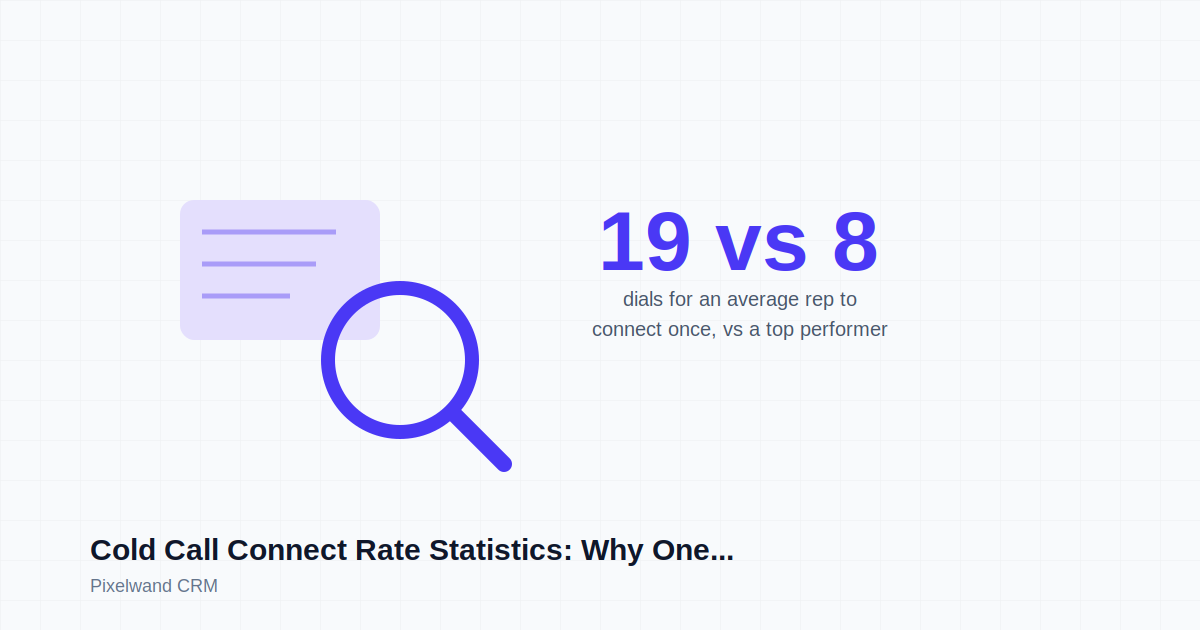
TL;DR: Ask five different sources how many dials it takes to reach a prospect and you'll get five different answers: 1.55 dials in Cognism's newest data, 6 to 8 in the older "rule of thumb" still repeated everywhere, 12.73 to 18.83 depending on whether you're dialing a direct number or a switchboard, and 19 dials for an average rep versus 8 for a top performer in Gong's analysis of 300 million-plus calls. These aren't contradictions, they're measuring different funnels on different data quality. The real story in the cold call connect rate statistics is that verified, direct-dial data connects at roughly 2x the rate of generic lists, and that gap, not rep effort, explains most of the spread.
Why do connect-rate reports disagree so much?
If you search for how many dials it takes to reach a prospect, you'll land on numbers that seem to disagree violently. Cognism's most recent State of Cold Calling report puts the average at just 1.55 dials to reach a prospect now, with roughly 93% of all eventual connects happening by the third attempt, a much steeper and shorter curve than the old "8 attempts" rule of thumb that still circulates in sales training decks. Klenty's benchmark tells a different story: it takes 12.73 dials to connect when calling a list of direct phone numbers, and 18.83 dials when calling switchboard numbers, meaning switchboard dialing takes 67% more attempts than direct dialing. Gong's analysis of over 300 million calls found that the average rep connects with just 5.4% of prospects dialed, while top-quartile reps connect with 13.3%, which works out to about 19 dials for an average rep to land one conversation versus 8 for a top performer. Belkins, drawing on more than 175,000 dials from a full year of SDR activity, found a per-dial connect rate of 9.9% but a per-prospect connect rate of 24.5% when a prospect is called multiple times, with an average of three dial attempts per prospect and 58% of connects turning into an actual conversation.
Read side by side, these numbers aren't in conflict, they're answering different questions. "Dials per prospect reached" is not the same metric as "dials per booked meeting," and both are wildly sensitive to whether the underlying phone data is fresh, verified, and mobile-first or stale and switchboard-heavy. That last variable turns out to explain most of the spread.
Verified data or generic lists: which connects more?
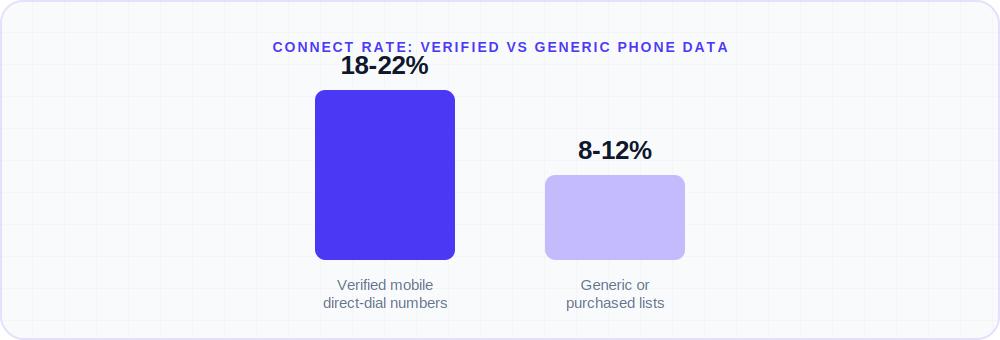
Benchmarks that triangulate multiple large datasets converge on a clean split. Average connect rate on generic or purchased B2B contact data sits around 8-12% in 2026, while verified mobile direct-dial data connects at 18-22%, roughly double. Top performers stacking clean data with disciplined timing and caller-ID hygiene push past 25%. Connect rate also varies 3 to 5 times by persona alone: SMB managers connect at 18-25%, while C-suite prospects connect at just 4-6%, which means a blended "industry average" connect rate is close to meaningless unless you know who's actually being dialed.
Some SaaS teams report even lower numbers, in the 5-8% range, down from the 15-20% benchmarks many managers still quote from a few years ago. The drop isn't about reps getting worse at their jobs. Carrier-level spam filtering and STIR/SHAKEN caller-ID attestation have made it dramatically easier for a number to get flagged, and once a number is tagged "Spam Likely," its connect rate can fall 70-90% overnight, no change in dialing skill required.
Why your connect rate keeps falling even if your team hasn't changed?
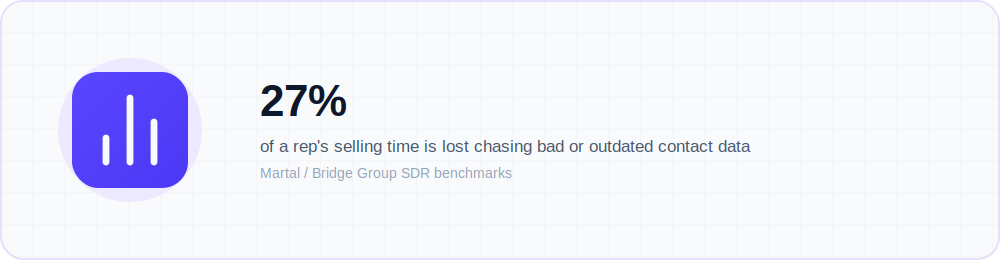
The most persistent driver behind declining connect rates has nothing to do with scripts or coaching. B2B contact data decays at roughly 2.1% a month, close to 22.5% a year, so a list that performed well six months ago is measurably staler today by simple attrition alone. Bad contact data is estimated to cost reps roughly 27% of their working time chasing wrong numbers and disconnected lines, and separate research from Hiya found that 86% of consumers don't answer calls from numbers they don't recognize at all, cold or otherwise. Put those together and you get a structural explanation for why connect rate keeps sliding for teams that haven't changed a single thing about how they sell: the data underneath them is quietly rotting, and the phone network itself has gotten better at screening it out.
Curious how this looks with your own pipeline?
15-minute walkthrough, no pressure, cancel anytime.
Does persistence still matter on a shorter timeline?
None of this means persistence stopped mattering, it just compressed. Cognism's newer data showing 93% of connects landing by the third attempt doesn't mean reps should stop at three, it means the payoff curve is front-loaded rather than spread across eight or ten calls the way older training assumed. Meanwhile the behavioral gap hasn't closed: separate research on follow-up behavior finds only 8% of salespeople make it as far as a fifth follow-up attempt, even though making six or more calls to the same prospect can lift contact rates by roughly 70%. Belkins' data backs this up in aggregate: prospects who connect at all are typically reached in about three attempts, and 58% of those connects turn into an actual conversation, meaning the dials that "don't work" on attempt one or two are frequently still doing useful groundwork for attempt three.
Where Pixelwand CRM fits in
Most of the confusion in cold call connect rate statistics comes down to teams not actually knowing their own number. Pixelwand CRM's native calling, built on Twilio (bring-your-own-carrier), puts click-to-call directly on the lead or deal record and logs every dial attempt automatically, so you can see your real connect rate per rep, per list, per persona instead of guessing from a spreadsheet. Because Pixelwand also unifies calls, WhatsApp, web form submissions, and email into one pipeline automatically, a number that looks "cold" on paper often isn't: a rep can see that the same lead already opened an email or replied on WhatsApp before dialing, directly addressing the "no prior touch" problem that drags down connect rates on pure cold lists. Custom statuses and assignment rules let you route dial attempts by segment or persona rather than treating every contact the same way, and Slack notifications flag real connects the moment they happen so a rep's next move (a calendar invite via Google Calendar sync, a WhatsApp follow-up, an email logged through Gmail or Outlook sync) happens while the conversation is still warm instead of an hour later.
Quick answers
How many dials does it actually take to reach a prospect?
It depends entirely on which benchmark and which data quality you're measuring, anywhere from under 2 dials on the freshest verified data to nearly 19 on an average generic list, which is exactly why a single blended number is the wrong thing to optimize against.
What is a good cold call connect rate in B2B sales right now?
Treat 8-12% as the generic-data floor, 18-22% as the verified-data average, and 25%+ as a realistic top-performer ceiling, then adjust further for persona since C-suite and SMB contacts connect at very different rates.
*Sources: Martal Cold Calling Statistics, Klenty Cold Calling Statistics, Cleverly Cold Calling Statistics, Belkins B2B Cold Calling Benchmarks, SkipCall Cold Call Connect Rate Benchmarks, Prospeo Cold Call Connect Rate, SalesHive Cold Calling Benchmarks, SalesHive Cold Calling Success Rates
The best time to call leads sits in two windows most studies agree on, late morning and late afternoon. Here's where the data still disagrees.
Voicemail response stats: up to 80% of B2B calls land in voicemail, yet fewer than 5% get a callback. Here's what works instead.
Only 61% of business calls reach a person, and 82% of blocked callers say they'll call a competitor next. Here's what it means for pipeline.
Frequently asked questions
How many dials does it actually take to reach a prospect?
It depends entirely on which benchmark and which data quality you're measuring. Cognism's most recent State of Cold Calling data puts the average at 1.55 dials per reached prospect, with 93% of connects happening by the third attempt. Older, still widely quoted benchmarks put the number at 6 to 8 attempts, and Gong's analysis of 300 million-plus calls found it takes about 19 dials for an average rep to land one live conversation versus 8 for a top-quartile rep. Klenty's data adds another wrinkle: 12.73 dials when calling direct numbers versus 18.83 dials when calling switchboards. None of these numbers are wrong, they're measuring different funnels (per-dial, per-prospect, per-meeting) on different underlying data quality.
What is a good cold call connect rate in B2B sales right now?
On generic or purchased contact lists, 8-12% is the realistic 2026 average, and some SaaS teams report as low as 5-8%. On verified mobile direct-dial data, connect rates run 18-22%, and top performers stacking clean data with disciplined timing hit 25% or higher. Connect rate also swings 3 to 5 times by persona, with SMB managers connecting at 18-25% and C-suite prospects at just 4-6%, so compare your numbers against your actual buyer persona, not a blended industry average.
Why is my connect rate dropping even though my team hasn't changed?
The most common culprits are upstream of the rep entirely. Carrier spam filtering and STIR/SHAKEN caller-ID labeling have pushed old 15-20% connect rate benchmarks down to 5-8% for many teams, and a single number tagged 'Spam Likely' can lose 70-90% of its connect rate overnight. On top of that, B2B contact data decays roughly 2.1% a month, about 22.5% a year, so a list that connected fine six months ago is measurably staler today even with zero change in rep behavior.
Does calling a prospect who already got an email or WhatsApp message improve connect rates?
Directionally yes. Analysts tracking connect rate drivers consistently flag 'no prior touch' as one of the biggest reasons a cold, unrecognized number gets ignored, while a number the buyer half-recognizes from a recent email or message is more likely to get answered. That's also why unifying calls with email and messaging history on the same lead record, rather than dialing from a bare phone list, tends to outperform pure cold dialing on connect rate.