Lead Source Conversion: Referrals Close 3-5x More
Lead source conversion stats: referrals win 50-70% of opportunities versus 10-20% for cold outbound. Yet most CRMs can't show it.
TL;DR: Lead source conversion rate statistics tell a consistent story across every study we found: referrals win 50 to 70 percent of opportunities compared to 10 to 20 percent for cold outbound, and even conservative estimates put referral-sourced deals at roughly 3 to 5 times the close rate of the average outbound-generated lead. Inbound organic and direct traffic land in between. Paid social is usually dead last. Yet most sales teams still can't reliably answer "which lead source actually converts" because their CRM never captured the source cleanly in the first place.
How big is the gap between lead sources?
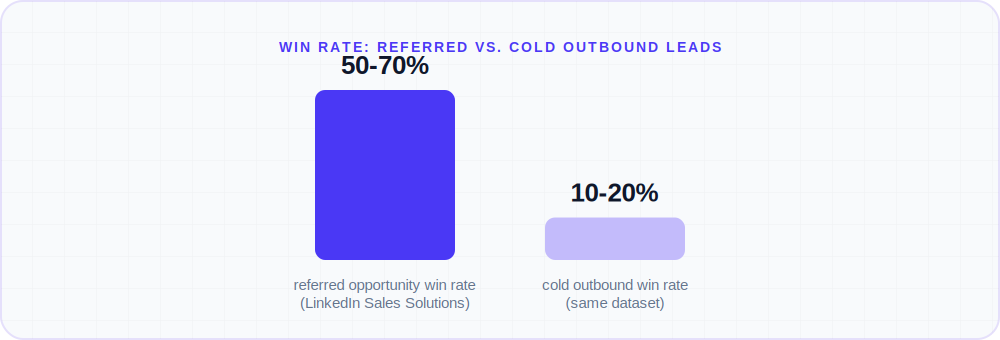
Ask most sales leaders which channel produces their best leads and you'll get a confident, unverified answer. The data tells a more specific story. Referral-sourced B2B opportunities win at 50-70%, compared to just 10-20% for cold leads, according to LinkedIn Sales Solutions research cited in GrowSurf's referral benchmarking. That's not a marginal edge, it's the difference between a coin flip favoring you and one stacked against you before the first call happens.
The pattern holds up under different methodologies too. One frequently cited comparison of warm and cold lead performance puts inbound leads at roughly 14.6% close rate versus 1.7% for cold outbound, a gap of about 8.6x. A separate industry review using more conservative ranges still puts cold outbound at 1-3% and warm, referred, or otherwise pre-qualified leads at 10-20%, a 5-10x multiplier that shows up "across most B2B benchmarks" regardless of exactly how each study defines a conversion.
Speed to close moves in the same direction. Referral-sourced B2B deals have sales cycles about 35% shorter than outbound-sourced deals, according to Heinz Marketing research, and require roughly 50% fewer touchpoints before conversion. Champify's 2025 Impact Report found a similar effect for deals sourced from known contacts, former customers or champions who changed companies, which produced a 37% win rate versus 19% for cold outbound in the same dataset.
Is inbound really 8x more efficient than outbound?
Not every dataset agrees on how large the outbound penalty really is, and that disagreement matters if you're deciding where to put next quarter's budget. Ebsta and Pavilion's 2025 GTM Benchmarks, built from 655,000 opportunities worth $48 billion across 387 companies, scored each lead source on an efficiency index (win rate multiplied by average contract value, divided by sales cycle length). On that measure, partner referral scored highest at 1.3x, organic inbound came in at 1.2x, outbound sat close behind at 1.05x, and paid finished last at 0.68x. In other words, once you account for the fact that outbound deals tend to be bigger or move faster in some organizations, a well-run outbound motion isn't nearly as far behind inbound as raw conversion percentages suggest. It's referral and paid that sit at the two extremes, not inbound and outbound.
Channel-level conversion data from Ruler Analytics, drawn from more than 5 million tracked conversions, puts this in visitor-to-lead terms: direct traffic converts at 3.3%, referral at 2.9%, organic search at 2.6%, paid search at 1.5%, and paid social at just 0.9%, the weakest channel measured. The ranking is fairly stable across the reports we reviewed even when the exact percentages shift: paid social is consistently the least efficient lead source, and referral or direct traffic consistently sit near the top.
What almost none of these reports disagree on is that averaging everything into one blended "conversion rate" hides the story. A team that blends a 0.9% paid social rate with a 2.9% referral rate into a single company-wide number of roughly 2% has no idea whether either channel is actually healthy relative to its own peers, and it can't make an informed call about where to invest next.
Why most teams still can't answer "which source converts best"?
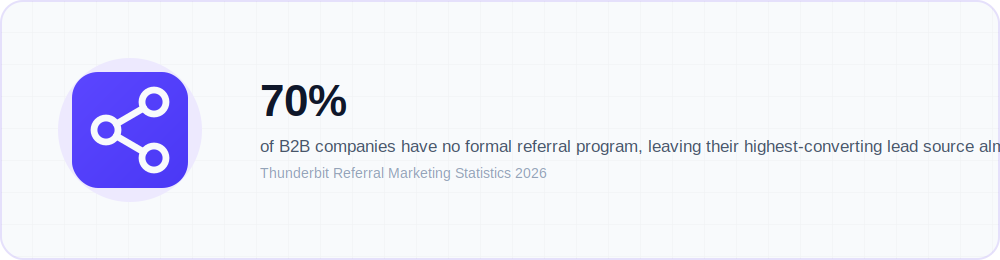
Despite referrals being the highest-converting channel in nearly every study, only about 30% of B2B companies run a formal referral program, according to referral marketing research compiled by Thunderbit, meaning roughly seven in ten companies are leaving their best-performing channel almost entirely unmanaged. That's consistent with a broader pattern we've written about before on this blog: sales teams tend to over-invest process and tooling into the channels that are easiest to track (paid ads, form fills) and under-invest in the ones that are hardest to attribute (referrals, warm intros, word of mouth) even when the harder-to-track channel is winning by a wide margin.
The root problem is usually not strategy, it's plumbing. Lead source gets logged accurately when a form fill hits a landing page with clean UTM tags. It gets logged as "unknown" or simply skipped when a referral shows up as a phone call, a WhatsApp introduction, or a forwarded email thread, because nobody built a required field into that intake path. Every study above depends on lead source being tagged consistently at the moment of creation. If your CRM can't do that automatically across every channel a lead might arrive through, your own source-level conversion numbers are probably less reliable than any benchmark in this article.
Curious how this looks with your own pipeline?
15-minute walkthrough, no pressure, cancel anytime.
Where Pixelwand CRM fits in
The lead source data above is only useful if every lead actually gets tagged with where it came from, which is exactly the gap that trips up most teams. Pixelwand CRM unifies leads and deals from calls, WhatsApp, web forms, and email into one pipeline automatically, so a referral that shows up as an inbound call through native Twilio calling gets the same clean source record as a form fill or a Facebook/Instagram lead ad synced directly into the CRM. Native two-way WhatsApp Business API messaging keeps referral conversations (often the channel where warm intros actually happen) attached to the lead record instead of buried in someone's personal phone. And because Pixelwand supports custom fields, custom statuses, and assignment rules, teams can tag lead source at intake and automatically route high-converting channels like referrals to their fastest, most senior reps instead of letting them sit in a general queue behind cold outbound leads that convert at a fraction of the rate.
Quick answers
Referrals convert 3 to 5x better than outbound. Referred opportunities win at 50 to 70%, versus 10 to 20% for cold leads.
Inbound versus outbound depends on the math. Raw close rates favor inbound heavily, but efficiency gaps narrow once deal size and cycle length count.
Source tracking breaks on plumbing. Calls, WhatsApp intros, and forwarded threads need automatic tagging or reporting is guesswork.
Sources: GrowSurf B2B Referral Marketing Stats, ReferralRock B2B Referral Statistics, Thunderbit Referral Marketing Statistics, Martal Conversion Rate Statistics 2026, Ruler Analytics Conversion Rate Benchmarks, ivristech Warm vs Cold Lead Conversion Multiplier, Outreach Bloom: Outbound vs Inbound Lead Generation, Ebsta 2025 GTM Benchmarks Report, Zenitdata B2B SaaS Win Rate Benchmarks
Lead nurturing statistics: nurtured leads make 47% larger purchases and convert 20% more often, yet 65% of marketers skip nurture programs.
How many touchpoints to convert a B2B lead: 8 average touches to 266 for a full SaaS deal, and why top performers need fewer, not more.
Upsell and cross-sell statistics show existing customers convert 60-70% of the time, versus just 5-20% for new prospects, per Marketing Metrics research.
Frequently asked questions
Which lead source converts best in B2B sales?
Referrals consistently convert best. Referred opportunities win at 50-70% compared to 10-20% for cold outbound leads, and independent research from Ebsta and Pavilion's 2025 GTM Benchmarks scored partner referral as the single most efficient channel measured, at 1.3x versus 1.05x for outbound and 0.68x for paid. Direct traffic and organic search follow, with paid social typically the weakest converter.
What is the real inbound vs outbound conversion rate gap?
Estimates vary by dataset, but most point the same direction. One widely cited comparison puts inbound leads at roughly 14.6% close rate versus 1.7% for cold outbound. A separate, larger analysis of 655,000 opportunities found a smaller gap once contract value and cycle length are factored in, with outbound sitting within about 13% of organic inbound on an efficiency basis. Both are true at once: outbound converts far less often per lead, but a disciplined outbound motion can still be efficient at scale.
Why do referral leads convert so much higher than other channels?
Referred prospects arrive with trust already transferred from someone they know, so they skip much of the skepticism a cold or even inbound lead brings. That shows up as a shorter sales cycle (referral-sourced deals close about 35% faster, per Heinz Marketing research) and fewer touchpoints needed to get to a decision.
Why can't most sales teams answer which lead source converts best?
Because lead source data is usually scattered across ad platforms, spreadsheets, a phone system, and a CRM that only captures whatever a rep remembers to type in. Without a system that automatically tags where every call, form, WhatsApp message, and email thread originated, source-level conversion reporting is really just a guess dressed up as a dashboard.