Facebook Lead Ads: Cheap Leads Convert at 7.72%
Facebook lead ads cost 60% less than Google's, but convert at only 7.72% on average, and a quarter of companies never follow up at all.
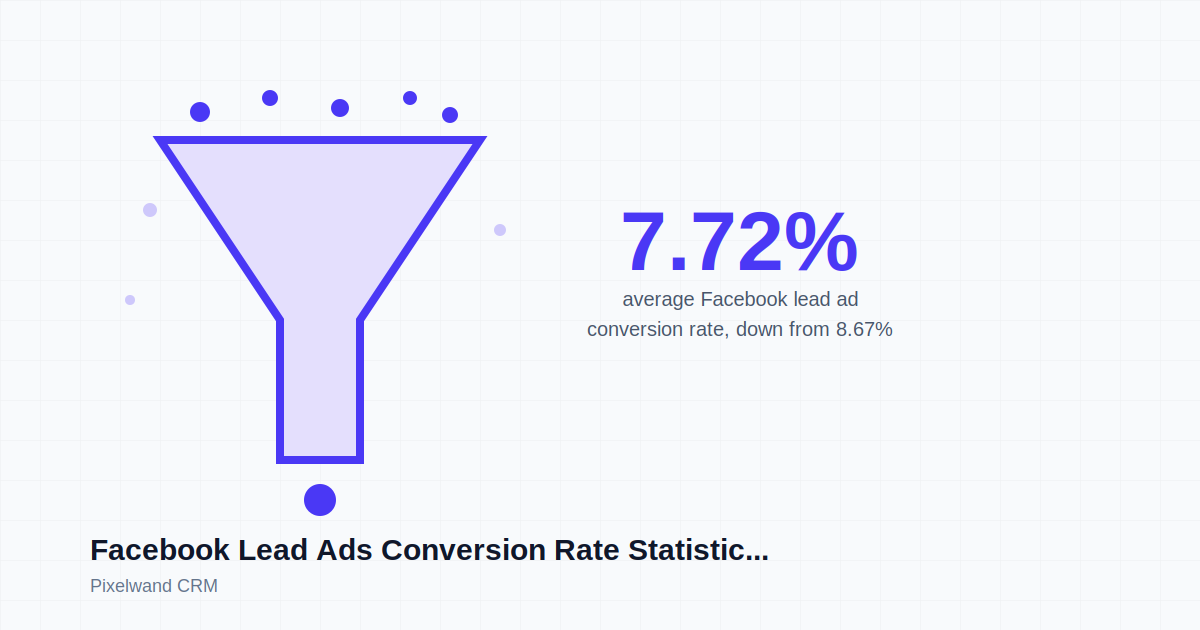
TL;DR: Facebook and Instagram lead ads are cheap, averaging $27.66 per lead versus $70.11 on Google, but the newest Facebook lead ads conversion rate statistics put the average close rate at just 7.72%, down from 8.67% the year before. The culprit isn't the ad, it's the format. Pre-filled Instant Forms remove almost all friction, which pulls in a wider mix of low-intent taps alongside real buyers, and roughly one in four companies then make the problem worse by never following up on the lead at all. Cheap leads and slow, unstructured follow-up cancel each other out.
Why Facebook and Instagram lead ads look so cheap on paper?
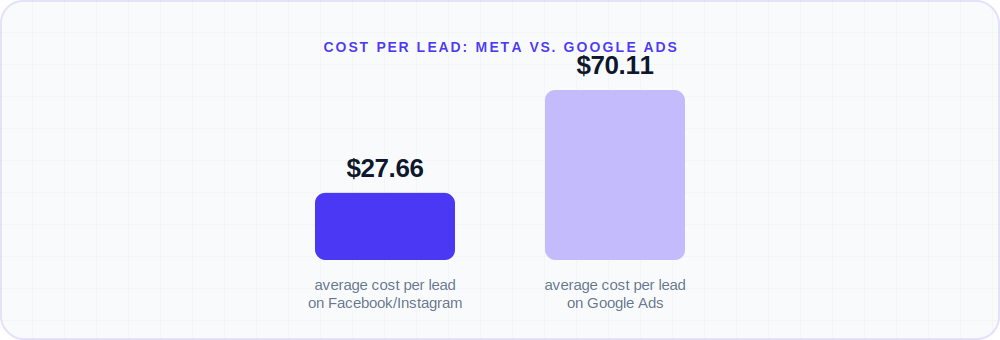
The pitch for Meta lead ads is simple: a form appears inside the app, a user's name, email, and phone number are already populated from their profile, and submitting takes one or two taps. No landing page to load, no typing, no leaving the platform. That low friction shows up directly in cost. WordStream's 2025 Facebook Ads Benchmarks report, covering more than 1,000 accounts on the leads objective, put the average cost per lead at $27.66, a steep 21% increase year over year but still dramatically cheaper than the $70.11 average cost per lead on Google Ads over the same period. For a marketing team judged on cost per lead alone, that gap is the whole argument for shifting budget toward Meta.
The problem is that cost per lead was never the metric that mattered. It's the metric that's easiest to report.
Why has the 7.72% lead-ad rate fallen?
Once a lead actually reaches a sales team, the picture looks different. The same WordStream 2025 benchmark data shows the average conversion rate for Facebook lead ads campaigns sitting at 7.72% across industries, a decline from 8.67% the prior year. That's the conversion rate from click to submitted lead, not from lead to customer, and it's still falling even as the leads themselves get more expensive.
Averages also hide a wide spread. LocaliQ's 2025 industry breakdown found restaurant and food brands converting at 18.25% and attorneys and legal services at 10.53%, while furniture came in at just 3.77%, physicians and surgeons at 4.51%, and home improvement at 5.22%. The pattern tracks emotional immediacy and low commitment more than it tracks ad spend or creative quality. A form for "get a free quote on your kitchen remodel" asks for more implicit commitment than "enter to win a free consultation," and the conversion numbers reflect that difference almost exactly.
Why pre-filled Instant Forms convert worse than a landing page?
This is the part most media plans skip past. A website landing page form requires a visitor to leave the platform, load a page, and manually type their contact details. That friction is annoying, but it's also a filter. Someone who wouldn't bother typing out their email on a landing page will still tap "submit" on a form that's already filled in with their Facebook profile data. Industry analysis of Meta's Instant Form mechanics consistently describes this as the core tradeoff: lower friction produces more form completions, but it also produces a meaningfully wider range of intent levels inside that same pool of leads, since users can complete a pre-filled form while barely registering that they've done it.
None of that makes lead ads a bad channel. It means the leads arriving from them need a different downstream process than a lead who filled out a five-field contact form after searching for your product on Google. Treating every Facebook lead exactly like a warm inbound inquiry, with the same one-email-and-wait follow-up cadence, is where most of the wasted spend actually happens.
Where do Facebook leads actually die?
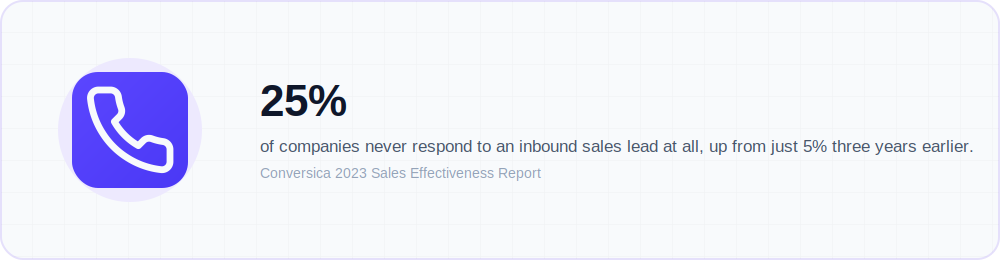
Even a perfectly average 7.72% lead never has a chance to convert if nobody talks to them. Conversica's 2023 Sales Effectiveness Report, which anonymously tested how real companies handle inbound leads, found that one in four companies tested did not respond to inbound leads at all, a sharp jump from just 5% the last time the study ran in 2020. Among the companies that did respond, roughly 35% gave up after only one or two contact attempts, far short of the six to eleven attempts researchers generally recommend, leaving only 12% of companies scoring in the top tier for follow-up persistence.
Stack that gap on top of a lead source that's already lower intent by design, and the math gets worse fast. A cheap lead that nobody calls back within the window where their impulse was still fresh isn't a bargain. It's a wasted ad dollar with extra steps.
How fast should you follow up on a Facebook or Instagram lead?
There's no universal industry-specific benchmark for Meta ad leads specifically, but the underlying behavior is well understood: someone taps submit mid-scroll, in a moment of passing interest, and that interest decays quickly if nothing happens next. The practical takeaway from advertisers and CRM operators who track this closely is that Meta leads need to hit a live conversation, whether that's a call, a text, or a WhatsApp message, within minutes, not the next business day. Waiting even a few hours effectively hands a cheap, low-friction lead to whichever competitor responds first, which erases the entire cost advantage that made the channel attractive in the first place.
Curious how this looks with your own pipeline?
15-minute walkthrough, no pressure, cancel anytime.
Where Pixelwand CRM fits in
The gap between a cheap Facebook or Instagram lead and an actual conversation is almost entirely a speed and routing problem, which is exactly what Pixelwand CRM is built to close. Facebook and Instagram lead ad syncing pulls new submissions directly into the CRM the moment someone taps submit, with no manual CSV exports and no waiting on a Zapier polling interval. From there, assignment rules route the lead to the right rep automatically, and native two-way WhatsApp Business API messaging lets that rep send a first message from inside the lead record within seconds, rather than opening a separate app. For leads that need a voice conversation, click-to-call through Twilio starts the call directly from the record, and Slack notifications alert the team in real time so a fresh lead never sits untouched for hours. Custom fields and custom statuses also make it easy to tag leads by source and intent level, so a Meta Instant Form lead and a website contact-form lead can be tracked, scored, and followed up on differently instead of being funneled through the same generic cadence.
Sources: WordStream Facebook Ads Benchmarks 2025, LocaliQ Facebook Advertising Benchmarks for 2025, Search Engine Land: Facebook ad costs jump 21% in 2025, but still beat Google, Conversica 2023 Sales Effectiveness Report via BusinessWire
After-hours lead response stats: 39% of B2B conversations happen outside 9-to-5, yet slow replies cut qualification odds by up to 60x.
Lead nurturing statistics: nurtured leads make 47% larger purchases and convert 20% more often, yet 65% of marketers skip nurture programs.
Lead source conversion stats: referrals win 50-70% of opportunities versus 10-20% for cold outbound. Yet most CRMs can't show it.
Frequently asked questions
Why do Facebook and Instagram lead ads convert worse than website forms?
Instant Forms pre-fill a user's name, email, and phone straight from their Facebook or Instagram profile, so submitting takes one or two taps instead of typing everything into a landing page. That removes almost all friction, but friction is what used to filter out casual clickers. The result is a wider mix of intent levels in the same lead pool, which is a big reason the average Facebook lead ads conversion rate sits at 7.72% even though the cost per lead is far lower than Google's.
How fast should you follow up on a Facebook or Instagram lead?
As close to instantly as your process allows. Meta ad leads are typically impulse driven, someone saw an ad mid scroll and tapped submit, so the interest that triggered the form fill fades within minutes, not hours. Routing the lead into a CRM the moment it's submitted and triggering a call, WhatsApp message, or SMS immediately after is the single biggest lever for turning a cheap lead into a real conversation.
What is a good conversion rate for Facebook lead ads in 2025?
WordStream's 2025 benchmark puts the cross industry average at 7.72%, down from 8.67% the year before. Anything meaningfully above that, in the 10 to 18% range seen in categories like restaurants, legal services, and education, counts as strong. Industries like furniture, physicians, and home improvement typically land under 6%, so comparing your number to the overall average without adjusting for industry can be misleading.
Does Facebook lead ad quality vary a lot by industry?
Yes, substantially. LocaliQ's 2025 benchmark data found restaurant and food brands converting Facebook lead ads at 18.25% and legal services at 10.53%, while furniture came in at just 3.77% and physicians and surgeons at 4.51%. The gap has less to do with ad creative and more to do with how much identity verification and intent an offer naturally requires before someone is worth calling.