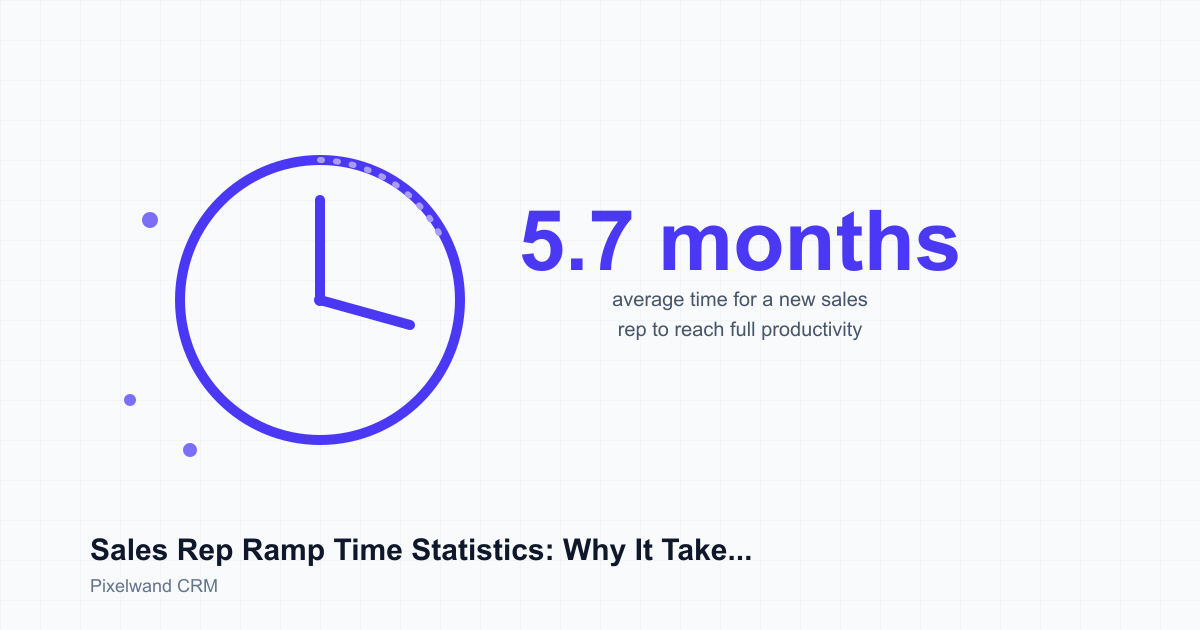
Rep Ramp Time: Nearly 5 Months to Productive
Sales rep ramp time statistics show new hires need 3 to 5.7 months to reach full productivity, and slow ramps now cost companies over $114,000 per replacement.
TL;DR: Sales rep ramp time statistics show new hires typically need 3 to 5.7 months to reach full productivity, and that number has been climbing, not shrinking. The Bridge Group's long-running benchmark puts SDR ramp at roughly 3.1 months and AE ramp at 4.9 months, while newer 2025-2026 research puts the average closer to 5.7 months across SaaS roles. With average sales rep tenure sitting around 18 months and full replacement costing over $114,000 per rep, a slow ramp isn't a training footnote, it's a direct hit to revenue. Fragmented tools are a big reason ramp is getting slower, and it's also exactly why CRM structure matters more than most sales leaders assume.
How long does it actually take a new rep to ramp up?
Ask five sales leaders how long ramp takes and you'll get five different numbers, which is part of the problem. The most cited long-term benchmark comes from the Bridge Group, which has tracked SDR and AE ramp time for years. Their research shows average SDR ramp time sits at 3.1 months and 4.9 months for AEs, and with average rep tenure running about 1.8 years for SDRs and 2.6 years for AEs, that means a new hire spends a meaningful chunk of their entire tenure just getting up to speed.
HubSpot's own benchmark lands close to this too. Separate research from HubSpot found it takes new reps an average of 3.2 months to fully ramp, a number that shows up consistently across sales enablement research from the last several years. Zooming out to a wider lens, the Sales Readiness Group's benchmark is broader: on average, it takes three to six months for a new sales rep to reach full productivity, and that range depends heavily on product complexity, sales cycle length, and how much structured training a rep actually gets.
Here's the part that should worry sales leaders more than any single benchmark: the trend line is moving the wrong way. Recent industry analysis pegs the 2025-2026 average ramp time for SaaS sales roles at 5.7 months, up sharply from 4.3 months in 2020, a jump of roughly 32% in five years. Enterprise B2B roles with long, multi-stakeholder sales cycles stretch even further, with some estimates putting full productivity for complex deals at 9 to 12 months.
The most common way teams actually calculate this isn't guesswork. A widely used method takes the length of the average sales cycle and adds a 90 day buffer, so a team with a 3 to 6 month sales cycle should expect at least 3 months, often closer to 6, before a new rep is genuinely contributing at full weight rather than just working through their pipeline for the first time.

What does a slow ramp really cost you?
Ramp time isn't just an HR metric, it's a compounding revenue problem. Average annual sales turnover runs close to 35%, nearly three times the 13% cross-industry average for voluntary turnover. That means a 10 person sales team can expect to replace three to four reps every single year, and each replacement resets the ramp clock to zero.
The dollar cost of that reset is bigger than most budgets account for. Research from DePaul University's Center for Sales Leadership found that across different business sectors, it costs an average of $29,159 to hire, $36,290 to train, and $49,508 to replace a sales rep, adding up to a total average of roughly $114,957 per departure. Other industry estimates place the fully loaded cost even higher once lost pipeline and management distraction are factored in.
Turnover itself compounds the ramp problem in an unforgiving way. According to CSO Insights, a 20% annual turnover rate is roughly average for sales organizations, but even that "normal" churn means replacing four out of every twenty reps you hire, each one needing months before they're covering their own cost to the business. It also takes time just to fill the seat in the first place. Industry survey data has found that filling an open B2B sales role takes around 60 days on average, before ramp time even starts counting. Add a 3 to 6 month ramp on top of a two month vacancy, and a single resignation can mean nearly nine months of reduced territory coverage.

Why ramp time keeps getting longer, not shorter?
Three forces are driving the increase. Buyers are more informed and more resistant to generic pitches than they were even a few years ago, which means reps need deeper product and market knowledge before a conversation even gets traction. Deals increasingly involve more stakeholders, which extends the learning curve for navigating a sale, not just pitching one. And sales tech stacks have grown considerably, with recent analysis noting that the average rep now works across seven to ten separate tools that all require their own training before a rep can be fully self sufficient.
That third point matters more than it gets credit for. Every additional disconnected tool a new rep has to learn (a separate calling app, a separate messaging app, a spreadsheet for pipeline, a different tool for email tracking) adds friction precisely when a rep can least afford it. It's not a coincidence that sales enablement research consistently finds effective onboarding decreases ramp-up time by 26%, according to the 2022 State of Sales Enablement Report, largely by removing exactly this kind of friction rather than adding more training content.
Curious how this looks with your own pipeline?
15-minute walkthrough, no pressure, cancel anytime.
What actually shortens ramp time?
The research on what works is fairly consistent: structure and consolidation beat volume of content. CRM-integrated enablement, where training, messaging, and playbooks live inside the tool reps actually use every day rather than in a separate wiki or LMS, has been shown to reduce onboarding time and close skill gaps faster than standalone training programs. One documented example: Renewable Energy Group cut new-hire ramp-up time by 50% through guided, in-app CRM instruction, saving roughly three months of onboarding time per rep. The pattern shows up again and again in ramp research: reps ramp faster not when they're given more to read, but when the system they have to learn is simpler and the data they need lives in one place instead of scattered across disconnected apps.
Where Pixelwand CRM fits in
A new rep's ramp clock starts running the moment they're handed a stack of logins. If they have to learn a separate dialer, a separate WhatsApp tool, a separate spreadsheet for tracking leads from Facebook ads, and a CRM that doesn't talk to any of it, every one of those seams adds days to ramp. Pixelwand CRM is built to remove exactly that kind of friction: leads and deals from calls, WhatsApp, web forms, and email land in one pipeline automatically, so a new rep learns one system instead of five.
Native click-to-call through Twilio and two-way WhatsApp Business messaging live directly on the lead record, so a rep doesn't need to context-switch between apps to follow up, they just work the record in front of them. Gmail and Outlook sync auto-logs email threads and calendar events, and Google Calendar sync adds meeting-prep summaries, which means a new rep walks into their first calls with context already assembled instead of digging for it. Facebook and Instagram lead ads sync straight into the CRM, custom fields and statuses mirror your actual sales process instead of a generic template, and assignment rules make sure a ramping rep is routed the right leads from day one. None of that replaces coaching or product training, but it does remove the tool-sprawl tax that recent ramp research points to as a real driver of that 5.7 month average, and that's time you get back on every single hire.
*Sources: Jiminny (Bridge Group data), Xactly, Remuner, Alba Talent, Sales So, Everstage, Hints, Performio, Hire Velocity, Get Gangly
Sales call prep stats: reps who research 15+ minutes win 50% more deals, yet only 49% of average sellers research consistently.
Clari analyzed 10M opportunities: the top 10% of sellers generate 65% of revenue while the bottom half contributes under 8%.
Rep turnover stats: reps leave at 35% a year, nearly triple the average, and each departure can cost $115,000 to $150,000 in pipeline.
Frequently asked questions
How long does it take a new sales rep to ramp up?
Most benchmarks put it between 3 and 5.7 months depending on role and deal complexity. The Bridge Group has long reported roughly 3.1 months for SDRs and 4.9 months for account executives, HubSpot's figure sits at 3.2 months, and the Sales Readiness Group puts full ramp anywhere from 3 to 6 months. More recent 2025 to 2026 benchmarks push the average closer to 5.7 months as sales tech stacks and buyer complexity have grown.
What is a good ramp time for sales reps?
A good ramp time is usually defined as your average sales cycle length plus a 90 day buffer, since a rep can't be expected to close deals faster than your product actually sells. For a team with a 3 month sales cycle, a realistic ramp target is around 6 months. Anything meaningfully shorter than your sales cycle plus buffer is likely measuring activity, not real quota-carrying productivity.
Why is sales rep ramp time increasing?
Ramp time has grown because buyers are more resistant to generic pitches, deals require more stakeholders, and reps now have to learn more tools before they can sell effectively. Recent analysis points to reps juggling seven to ten separate sales tools during onboarding, on top of learning the product and market, which stretches the time it takes to become self sufficient.
How much does slow ramp time actually cost a company?
A lot more than the training budget line suggests. Research from DePaul University's Center for Sales Leadership found it costs an average of roughly $114,957 to hire, train, and replace a single sales rep, and with average sales turnover running near 35% a year, a 10 person team can lose three to four reps annually before counting the revenue those open territories never generated during the vacancy and ramp period.