Rep Turnover: Losing One Rep Costs Over $115K
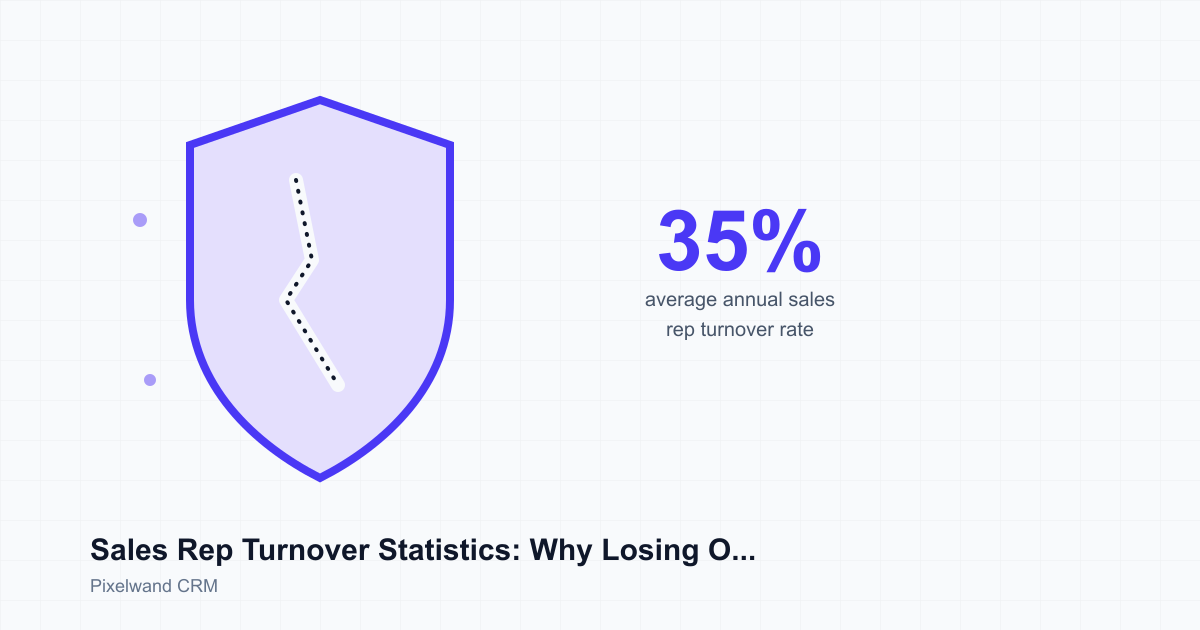
Rep turnover stats: reps leave at 35% a year, nearly triple the average, and each departure can cost $115,000 to $150,000 in pipeline.
TL;DR: Sales rep turnover statistics paint a rough picture: reps leave at roughly 35% a year, nearly three times the cross-industry average, and each departure carries a fully loaded cost of $115,000 to $150,000 once recruiting, ramp time, and lost pipeline are counted. The bigger hidden cost isn't the empty seat, it's the pipeline that stalls the moment a rep walks out, because deals inherited by a replacement close at meaningfully lower rates than deals nurtured from the start. Most of that damage is preventable if the relationship history, not just the contact record, survives the handoff.
Why do leaders underestimate 35% turnover?
Sales has always had a reputation for churn, but the scale of it still surprises most operators when they see it written down. Research cited by Xactly and HubSpot puts the average annual sales rep turnover rate at 35%, compared with about 13% across all other industries, meaning reps quit or get moved out at nearly three times the rate of the average worker. A separate estimate reported by Harvard Business Review and cited in Cangrade's longitudinal turnover research puts U.S. sales turnover as high as 27% a year, still roughly double the overall labor force.
Neither number is an outlier quarter. SiriusDecisions data cited by Xactly found that 45% of B2B sales organizations report turnover rates above 30%, which means for nearly half the industry, high churn isn't a crisis to fix, it's the baseline they're already operating on. Breaking it down by role makes the pattern sharper: SDR and BDR positions, the entry point into most sales orgs, churn at roughly 45% annually, while account executive roles run closer to 30%, according to benchmark data referenced by Outperform Institute and industry analyses of B2B sales operations.

What one departure actually costs?
The recruiting fee is the visible cost, and it's the smallest one. Salesforce research and Outperform Institute benchmarks consistently place the fully loaded cost of losing a sales rep at $115,000 or more per departure, a figure built from recruiting and job board spend ($15,000 to $25,000), formal onboarding and training ($20,000 to $40,000), and the revenue gap left by an inactive or transitioning territory. On top of that, sales leaders and managers often burn 25% to 50% of their time on hiring activity during high-turnover stretches, time that isn't going toward coaching, forecasting, or closing.
SDR-specific research tells a similar story at a different scale. The Bridge Group's 2024 Sales Development Report estimates the fully loaded cost of sales rep turnover, including ramp time, lost pipeline, and management overhead, lands between 150% and 200% of the departing rep's annual on-target earnings. For a $70,000-OTE SDR, that's a real cost north of $100,000 once everything is accounted for, not the $10,000 to $20,000 sticker price of a recruiter fee.
None of these estimates fully capture the slowest-moving cost: the deals still sitting open in the CRM when the rep's laptop gets returned.
Why inherited pipeline dies quietly?
Open deals don't vanish the day a rep leaves. They just stop moving. The prospect who had a rapport with the departing rep is handed to someone they've never spoken to, on a timeline that person is managing while also learning the account, the product, and the CRM at the same time. Industry analysis referencing Harvard Business Review research on this handoff effect found that deal close rates on inherited pipeline run 30% to 50% lower than on deals the closing rep developed themselves from the first call, and that sales cycles tend to stretch further once the primary relationship changes mid-negotiation.
That gap exists because so much of what moves a B2B deal forward, who the real decision maker is, what objection got raised in week three, what the champion actually needs internally to get budget approved, never makes it into a tidy CRM field. It lives in the departing rep's head, their inbox, their call notes, and their WhatsApp threads. When they leave, that context leaves with them, and the replacement is left rebuilding trust from zero on a clock they don't control.

Average tenure makes this worse, not better. Xactly Insights data suggests reps hit peak performance somewhere between two and three years into a role, while average sales rep tenure sits at roughly 18 months, and SDR tenure is often shorter still, closer to 14 to 16 months. Most reps are handing off relationships and leaving the company before they ever reach their most productive stretch, which means the "inherited pipeline" problem isn't a rare event, it's a recurring one, every 14 to 18 months, for every seat on the team.
Curious how this looks with your own pipeline?
15-minute walkthrough, no pressure, cancel anytime.
Where Pixelwand CRM fits in
Turnover is never fully avoidable, but how much context you lose when it happens is a system design problem, not a people problem. Pixelwand CRM keeps every lead and deal record built around the full communication history rather than the individual rep's inbox. Calls placed through native Twilio calling, two-way WhatsApp Business API conversations, and Gmail or Outlook threads all auto-log directly onto the lead or deal record, so when a territory changes hands, the replacement isn't starting from a blank contact card, they're picking up a conversation history that already shows what was said, promised, and asked for.
Assignment rules make the handoff itself faster and less error-prone: when a rep is offboarded, their open deals can be reassigned by rule rather than manually hunted down across spreadsheets and forwarded emails. Google Calendar sync with meeting-prep summaries gives an incoming rep a head start before their first call with an inherited account, and Slack notifications keep managers aware in real time when a reassigned deal goes quiet, instead of finding out at the next pipeline review that it stalled weeks ago. None of this stops reps from leaving, but it shrinks the gap between what the departing rep knew and what the CRM actually captured, which is exactly the gap that makes inherited pipeline close at a lower rate in the first place.
*Sources: Xactly, Xactly (6 Facts), Cangrade, Outperform Institute, Rewardian, Coruzant
Quota attainment stats: average B2B reps hit just 42.69% of quota in 2025, down from 53% in 2022. Here's what moves the number.
Demo to close rate statistics show just 15-20% of B2B sales demos become closed deals, and enterprise conversion runs as low as 5%.
Closed-lost leads statistics: up to 80% of prospects marked dead still buy within 18-24 months, often from a competitor who stayed in touch.
Frequently asked questions
What is the average sales rep turnover rate?
Sales rep turnover averages around 35% a year, compared to roughly 13% across other industries, according to research from HubSpot and Xactly. Some estimates cited by Harvard Business Review put U.S. sales turnover as high as 27%, still about double the overall labor force rate. SDR and BDR roles run even hotter, often churning at 40% to 45% annually.
How much does it cost to replace a sales rep?
Industry benchmarks from Salesforce research and the Outperform Institute put the fully loaded cost of replacing a sales rep at $115,000 to $150,000 once recruiting, onboarding, ramp time, and lost pipeline are included. Some SDR-specific models land lower, in the tens of thousands, while enterprise AE departures with large open pipelines can cost far more.
What happens to pipeline when a sales rep leaves?
Open deals do not disappear from the CRM, but they stall. Deals inherited by a new rep close at meaningfully lower rates than deals the original rep developed and nurtured from the start, because the buying relationship, context, and trust have to be rebuilt from scratch.
How long does the average sales rep stay at a company?
Average sales rep tenure sits around 18 months, and SDR tenure is often shorter, around 14 to 16 months. Research from Xactly Insights suggests reps typically hit peak performance between two and three years into a role, meaning most reps leave well before they reach their most productive stretch.