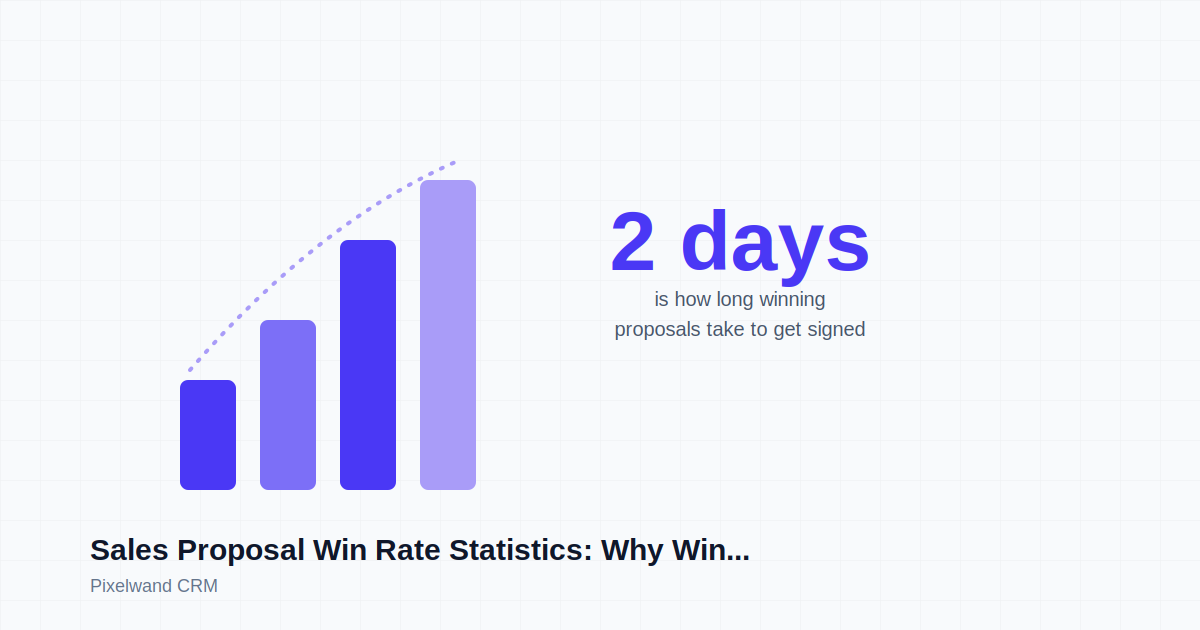
Proposal Win Rate: Winners Close in 2 Days
Proposal win rate stats: winners sign within two days and close at 36% with process versus a 20% average, yet most pipelines still stall.
TL;DR: Sales proposal win rate statistics tell a consistent story: speed and structure beat polish. Proposify's State of Proposals research, built from well over a million real proposals a year, finds that winning proposals are typically signed within about two days, while the broad industry close rate sits near 20% but climbs to 36% for teams running a structured, tracked process. PandaDoc's data adds the other half of the picture: template-based proposals go out in about 4 minutes instead of hours, and its most active customers see close rates around 60%. The pattern is clear. The proposal itself matters less than what happens in the hours right after you hit send.
How fast should you send a sales proposal, really?
Most sales teams treat the proposal as the finish line of the pitch and then quietly lose momentum right after sending it. That is a mistake the data punishes. Proposify's State of Proposals report, which mines data from over a million proposals sent through its platform, found that winning proposals are typically acted upon within just two days of being sent. If your team is taking longer than that to get in front of a decision-maker, you are introducing unnecessary risk into a deal you already worked hard to get to this stage.
The viewing pattern backs this up in an unintuitive way. Winning proposals are viewed an average of 2.5 times before they get marked closed-won, while proposals that end up lost are viewed more often, around 3.5 times on average. More engagement is not automatically a good sign. It frequently means the buyer is circling back because something is unclear, the pricing does not match what they expected, or a stakeholder who was not in the room now has questions nobody is answering quickly enough.
Why do structured proposals close at 36% vs 20%?
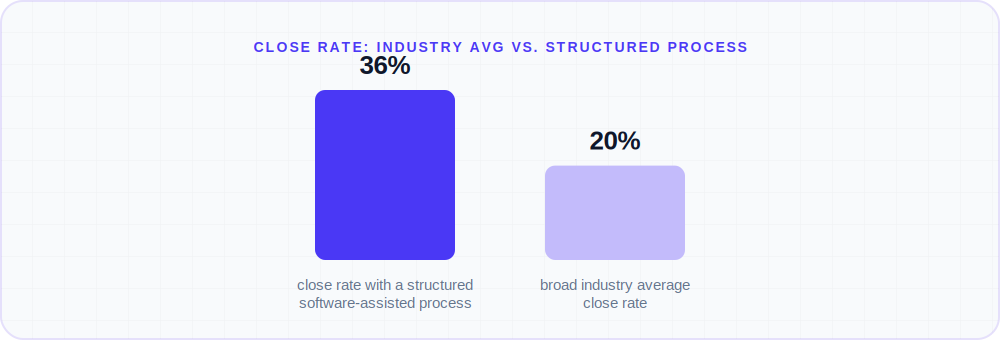
Here is where the numbers get concrete. Proposify's research puts the broad industry average sales close rate at roughly 20%. But when proposals go through a structured, tracked, best-practice process (built from a proven template, sent through software that shows you when it is opened, and followed up on the same day), the close rate rises to about 36%, nearly double the baseline. That gap is not about better writing. It is almost entirely about process discipline: sending fast, tracking engagement, and following up while the deal is still warm instead of guessing.
The same research points to smaller, very specific levers inside the document itself. When about 30% of a proposal's executive summary is customized to the actual prospect rather than copy-pasted from the last deal, close rates rise by roughly 50%. Interactive pricing tables, where a buyer can toggle options instead of reading a static price list, add another 6% lift. None of this requires a redesign. It requires reps to stop treating the proposal as a template to blast out and start treating it as the last real touchpoint before a decision.
How do templates drive a 60% close rate?
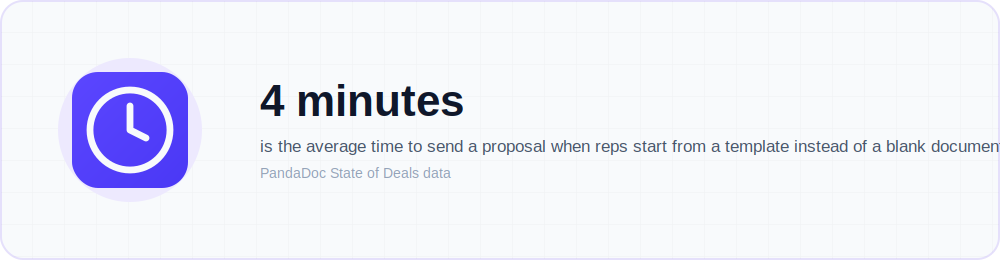
PandaDoc's own product data tells a complementary story from the creation side rather than the tracking side. Among its most active customers, 76% of sales documents are built from templates rather than written from scratch, and that shortcut alone cuts the average time-to-send down to just 4 minutes. Faster creation does not just save rep time, it changes behavior at scale: those same customers send 65% more documents overall, and they report an average close rate of 60%, which is well above either the 20% industry baseline or the 36% structured-process benchmark from Proposify's research.
The overlap between the two data sets is the real finding here. It is not one lever, it is two working together: a fast, low-friction send process that gets the proposal out while the conversation is still fresh, and a tracked follow-up process that tells a rep the moment a buyer opens the document so they can act instead of wait. Teams that only fix one half of that equation leave most of the upside on the table.
Curious how this looks with your own pipeline?
15-minute walkthrough, no pressure, cancel anytime.
Where Pixelwand CRM fits in
Proposals do not fail in a vacuum, they fail because the follow-up around them falls through the cracks of a fragmented tech stack. Pixelwand CRM is built to close exactly that gap. Gmail and Outlook sync automatically logs every email thread on the deal record, so when a prospect replies to a proposal (or goes quiet), the whole context is sitting on that lead's timeline instead of buried in someone's personal inbox. Custom statuses and custom fields let you track a deal through "Proposal Sent," "Viewed," and "Follow-Up Due" stages instead of leaving it parked in a generic "Negotiation" bucket where it is easy to forget.
When a proposal-stage deal needs a nudge, native two-way WhatsApp messaging and click-to-call through Twilio mean a rep can follow up directly from the deal record within minutes, not after digging up a phone number in a spreadsheet. Slack notifications alert the team in real time when a deal changes stage, so a proposal that has been sitting untouched for two days gets flagged before it goes cold. And because assignment rules and saved views make it easy to build a "proposals awaiting response" list, no rep has to rely on memory to know which deals need a same-day follow-up call.
Quick answers
Winners sign within about two days. Proposals left untouched for a week lose buyer urgency and context fast.
Process nearly doubles the baseline. Structured, tracked proposals close near 36% versus a 20% industry average.
Small customization pays. Personalizing about 30% of the executive summary can lift close rates by roughly 50%.
*Sources: Proposify State of Proposals, Proposify: How to Use Proposal Tracking to Improve Your Close Rate, Proposify: Proposal Design Best Practices, Proposify: Boost Close Rates with Smarter Proposal Management, PandaDoc press release on the State of Deals data
Demo to close rate statistics show just 15-20% of B2B sales demos become closed deals, and enterprise conversion runs as low as 5%.
Closed-lost leads statistics: up to 80% of prospects marked dead still buy within 18-24 months, often from a competitor who stayed in touch.
Average sales cycle length statistics: the median B2B deal takes 84 days, up 22% since 2022, and deal size explains only 27% of the variance.
Frequently asked questions
What is a good sales proposal win rate?
Across industries, the broad average close rate for sales proposals sits around 20%, according to Proposify's State of Proposals research covering well over a million proposals a year. Teams using a structured, software-assisted proposal process close at roughly 36%, nearly double the baseline, which is a more realistic target to aim for than an arbitrary industry number.
How long should it take to close a sales proposal?
Proposify's data shows winning proposals are typically acted on within about two days of being sent. If a proposal sits untouched for a week or more, the odds of it turning into a signed deal drop fast, since the buyer's urgency and the context from your last conversation fade.
How many times does a prospect view a proposal before signing?
Winning proposals are viewed an average of 2.5 times before being marked closed-won, while proposals that end up lost are viewed more, around 3.5 times on average. More views is not automatically a good sign. It often means the buyer is stuck on pricing or scope rather than getting closer to a decision.
Does personalizing a proposal actually raise the win rate?
Yes. Proposify's analysis found that when about 30% of a proposal's executive summary is customized to the specific prospect, close rates rise by roughly 50%. Generic, copy-pasted proposals are one of the most fixable leaks in a sales process.